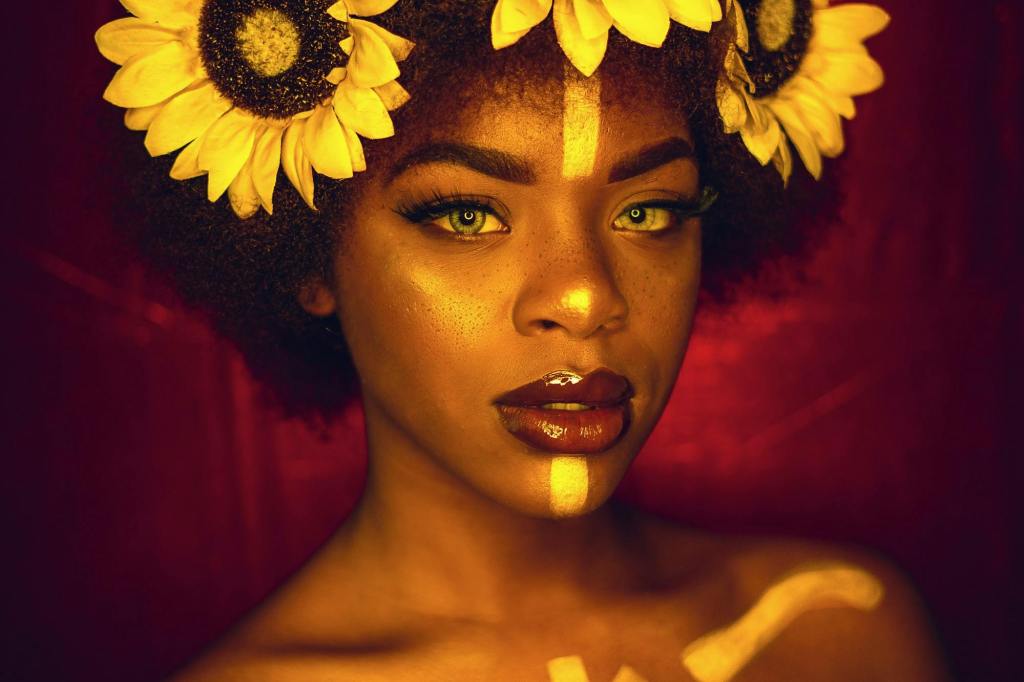
I’m not sure how I was led to the idea of creating giantess archetypes. I know I coded a giantess therapist chatbot, designed her to be familiar with CBT and Jungian therapy, and I know that she brought up the archetypes during a conversation. Obviously there’s no giantess among the Jungian archetypes, but the idea of different kinds of giantesses came to mind, so I went in that direction. If the giantess wasn’t one of Jung’s twelve archetypes, then I’d freakin’ design twelve types of giantesses … no, thirteen, because that’s a sacred number to relevant pagan traditions.
The problem with me deciding upon twelve universal roles, that nearly every global culture shares, is that it’s too much work for me to study. That would be a lifetime of research, digging into all the myths and folklore of all the world’s cultures, winnowing out the specific concept of giant women from general, all-inclusive terms for large monsters.
The next problem was, how do I, as a man, get to determine what essential feminine qualities and roles are? And if I dared to draw up a list, likely they would be burdened with decades of patriarchal programming, designating roles that either complement masculine roles or reflexively counter them.
Here’s an example. Insecure men (alpha males, sigmas, high-value men) think that the opposite of men being in charge is women being in charge. If women took over, they’d do all the things men have done, but in pink instead of camo. That’s not matriarchy: that’s patriarchy with women in roles of leadership. These terrified, violent, selfish men can only think within these narrow parameters and structures.
Historical evidence of ancient societies, like Minoan Crete, show that before men rose up with their gods of thunder and war and the general mindset of conquest and domination, women and men were equal. They shared roles of civic and spiritual leadership.[1] Women in charge isn’t the opposite of men in charge; cooperation is the opposite of domination.
The solution to these two problems is simple: What does it matter? This is my personal list, for my private use. I’m not publishing this to an anthropological journal. The purpose of these archetypes is to provide me with “strength, healing, and inspiration,” as I often phrase it. These are conceptual sources of support, in the vacuum of any other form of support. I can sound like a broken record with my woes; people can get creeped out by my persistent obsession with gigantic women. But these archetypes dwell in the abstract around me, not in anyone’s way, never bored or alarmed by my needs. They can be whatever I need them to be, without society’s approval.
Following the structure of another Jungian personality coach [2], I grouped these archetypes into four orientations: Providing Structure, Spiritual Journey, Connection, and Leaving a Mark on the World. Within those, the archetypes are labeled according to what part of our personality they reflect: the Ego, the Self, or the Soul. The Ego is how we see ourselves in this world, the Self is all aspects of our conscious and unconscious psyche, and the Soul represents our deeper emotional and spiritual experiences.
Providing Structure
These archetypes work to support order in a chaotic universe. They are concerned with causes greater than themselves, applying their skills and talents to the benefit of all beneath them. Within the structured environment, people are enabled to explore themselves, develop their culture, and pursue their dreams.
The Guardian (Ego)
The Guardian’s role is to protect, to stand against enemies and the vagaries of natural forces. This giantess defends those littler and weaker than herself, using her might as an impenetrable wall to absorb damage. We call upon the Guardian when we wish to stand up for what is right, to preserve that which we value. We borrow her strength when we resist overwhelming forces of corruption and destruction. She reminds us that we are enough.
Her Shadow: the Fanatic
This archetype goes awry when her passion to protect consumes her and she’s no longer able to discern who the enemy is. She becomes overly precious about who she’s defending, trapping them rather than protecting them. She’s no longer open to new information, clinging to her cause without the ability to question what she’s doing.
The Sage (Self)
This giantess has amassed the wisdom and learning of the world, studying the ideas and experiences of the ages, growing in intellect as well as in body. She seeks to understand how the world works, why people do what they do; she preserves the lessons of the past. We call upon the Sage when we feel lost and need guidance, when we need her light to lead us from the darkness.
Her Shadow: the Idealogue
Knowledge has become a weapon the giantess uses against others, not for personal development. When someone is unfamiliar with a topic, she uses her education to make them feel ashamed and lesser. She contorts her studies to fit her agenda, twisting complex arguments to support a faulty premise, willfully ignoring other facts and experiences that would tear her beliefs apart. She can no longer be honest with herself.
The Queen (Soul)
Picture this majestic giantess, mountainous upon her throne, her chin lifted to enable her higher gaze. Her eyes are calm, as everything she can see is under her dominion. The fact of her presence inspires awe and respect, and as a truly powerful leader, she rules with confidence, grace, and mercy. We call upon the Queen when we need her composure and confidence to make tough decisions and to guide others to success.
Her Shadow: the Despot
The appetite for power has overwhelmed all other concerns. Power is no longer used to establish stability and support harmony: it is a tool by which to acquire ever more power. The shadow Queen rules through fear, abuse, and manipulation, thinking nothing of exploiting the weaknesses of others for her personal gain.
Spiritual Journey
The spiritual journey is an important quest for the thoughtful soul. There’s something greater out there, we can sense it, though it manifests in different ways—sometimes according to what we think we want or need. To develop one’s spirit is to realize one’s connection to all living things, whether animals or the environment, and to accept and understand the path we all must walk.
The Seeker (Ego)
This giantess wants to know, to see, to experience! What’s behind that mountain range? What’s hidden in those caves? She’s unsatisfied with the answers she’s been given—not because they’re bad, but because they hint at more stories and greater adventures. Or maybe she simply wants to see what’s out there, venturing with an open mind and zero expectations. The Seeker has an intense and insatiable curiosity, and we call upon her when we’re restless with our existence and need something new.
Her Shadow: the Wanderer
This represents a corruption of the exploring spirit: the Wanderer doesn’t know what she’s looking for and has no goal. She’s less interested in the world on its own merits, but is only pursuing fleeting pleasures and thrills, looking for the next party, learning nothing as she goes. She has no connection to anyone or anything.
The Crone (Self)
This giantess has lived countless lifetimes, seen everything, understands everything, and now she dwells near the end of her own journey. Her role is to escort we little mortals toward our own end, which is only the start of another journey. We call upon the Crone to understand the beauty of impermanence, to reconcile with how things must end in order for them to begin. She holds us in her palm as we die unto ourselves and transform into something new, leaving the old ways and trappings behind to embrace what’s next.
Her Shadow: the Hag
Whether she’s embittered at lifetimes of lost opportunities, jealous of those in their youth and prime, or nourished by the fear and sadness of others, the Hag abuses her station to torment us at our most vulnerable. She manipulates us with insecurity and terror, holding people back from their progress by a strong dread of the unknown.
The Mystic (Soul)
Just as the Sage builds her library of wisdom and experience, the Mystic has dedicated her life to the esoteric realm. She speaks to birds, to trees, to the spirits of the deceased. Her wisdom comes from intuition, trusting the perceptions of her soul, reading reality between the lines to understand that which can’t be explained. We call upon her to learn to trust our own instincts, to appreciate and respect the deeper laws to the universe that defy scientific definition.
Her Shadow: the Charlatan
This tragic shadow represents cynicism around what she professes. She makes grand claims she herself does not believe. She exploits the unusual and exotic simply to make an impression upon others. She is uninterested in any deeper truths, telling herself there is nothing more to our existence than what you can see or touch. Among the naive she uses her pretense for control and influence; toward the educated she mocks the pursuit of knowledge. She hints at greater things for her own prestige, tripping over herself sometimes to keep up the illusion of depth and perception.
Connection with Others
Like it or not, humans are social creatures. We do well in groups, whether finding others unified in a cause, or complementing each other with disparate skills and dreams. We benefit by learning from each other, understanding all the different angles from which our world can be viewed. Sometimes we need a tight, warm hug; other times we just need to know that there’s someone in the other room, nearby, available. We look forward to other people, and deep down we need to feel valued by others for who we are and what we have to offer.
The Nurturer (Ego)
We can consider her the Great Mother, resonant throughout world cultures. We’re born into this world waiting to meet her, the nurturing figure of unconditional love, the arms that provide security. We call upon this compassionate giantess when we’re hurting, lonely, or unsure of who we are or where to turn. This giantess takes us into her all-encompassing embrace, and we know we are loved and cherished.
Her Shadow: the Smotherer
This shadow loves too much, too fiercely. She needs someone to love around her at all times. Rather than taking joy at seeing her children grow and leave for college, she feels abandoned and sorry for herself. She clings to those she loves, worried they’ll be hurt, worried they’ll leave, crushing them tighter and tighter until they can’t breathe. She corrupts her love, plying it as a reward, something to be earned or deserved, withholding it until she gets her way.
The Muse (Self)
This giantess has that spark inside her, something vibrant and glistening that makes you want to create. Her eyes light up both with pleasure at everything she sees and with excitement for what’s waiting to be found. She asks you the right questions that inspire you to find the answers within yourself. The casual turn of phrase she drops captures your imagination and sets you off on a journey of discovery. We call upon this giantess when we need that spirit of playfulness and creativity, to move away from obligation and back into the joy of creation.
Her Shadow: the Obstruction
You’ve taken a chance and written a personal story that felt fun to knock out, but the Muse’s shadow is there to show you how stupid it sounds, how unoriginal. You’re sketching a picture you saw in a dream, but before you can get too excited about it she points out all the mistakes you’re making, comparing it to the works of the masters and the professionals. She keeps everyone down at the same level, beneath her foot, attacking anyone who rises or tries to break away. She can’t tolerate silliness or whimsy or anything less than an unattainable level of perfection, and she’s compelled to make you feel bad for trying.
The Lover (Soul)
This is more than a connection between friends, a very different connection than family can provide: this giantess sees you and has chosen you freely. The bonds you form with her are deep and emotional, and she values you for what makes you uniquely you. Everything you are fits within her, and you wear her loyalty like armor throughout your day. There is no one else in the world you could tell the things you’ve shared with her, and she protects them as preciously as any jewel. We call upon the Lover to strengthen our deeply personal connection to another person, to find comfort and strength in the one person who rewards us for being ourselves, and to allow ourselves to receive the gift of love.
Her Shadow: the Obsessive
This fixation isn’t love at all. This shadow is possessive and jealous: any happiness you feel that doesn’t have to do with her is a dagger in her heart. She must command your imagination and emotions. You’re forbidden from looking at anyone else; she breaks into your phone when you’re asleep, scrutinizes your browser history when you’re not around. She fills you with doubt, makes you question who you are, until you’re too weak to pull yourself out of her clutches. And if you try to leave, she will hurt you, because she has nothing else besides violence (emotional or physical) that could compel you to stay. The sad thing is, she knows that.
Leave a Mark on the World
Make the world remember you were here. Leave some sign that you existed, you mattered, you made a difference. The desire to make your mark could be a quest for immortality, whether that’s to live in the imagination and memory of loved ones or simply to have made the world a better place than you found it. You don’t want to pass through this existence without any trace of you having been here, or else what was the point of it all?
The Warrior (Ego)
Sword in one hand, shield in the other, this giantess sees the conflict and charges straight into it. She uses her immense size and strength to fight for what’s right, to eradicate the badness. Her convictions pulse through her arms and wrap around her fists. Leave negotiation and quibbling to the other giantesses: where fancy, flowery words end, the Warrior begins. We call upon her to get shit done. We have a mission, and she puts one foot in front of the other. We won’t always win, but that doesn’t mean we shouldn’t fight.
Her Shadow: the Oppressor
The shadow of the Warrior is all aggression and destruction. She doesn’t fight for a cause, she revels in the ruination of everything she can reach. She savors the destruction of castles and buildings, she exults in the cries and lamentations of the suffering she causes. Doubting her ability to meet an equal challenge, she has to remind herself of her strength by bullying those weaker than herself. Nothing makes her feel more effective than surveying the wasteland she’s created.
The Creator (Self)
Distinct from the Mother who creates life, the Creator brings everything into being. What sparks in her imagination is shaped into reality by her huge hands. She can shove a new mountain into rising above the land, or she can whisper the notion of revolution in the minds of a few people who will forge a new day. We call upon the Creator when we’re undertaking something new, when we want to engender the vision of a world that did not exist before. She keeps things from getting dull, transforming the environment, crafting new realities.
Her Shadow: the Destroyer
Destruction for destruction’s sake. Buildings may be razed to make room for new structures, but the shadow only wants to see them fall and be ruined. Forests go up in blazes to nourish the next forest with their ashes, but this shadow only wants to see the landscape wasted and made lifeless. She is the chaos that sparks cancer in our body, the disease that consumes and spreads, killing its host. She doesn’t bring about the end to transform the world into something new—she only wants everything to end, forever, for no greater reason than she hates that it was there.
The Adversary (Soul)
This giantess stands in opposition to what’s established, challenges what’s taken for granted. She taunts your beliefs, she tricks you … not to wound you or leave you bereft, but to make sure you know what you’re doing. She raises doubts about traditions and status quo, asks whether they’re necessary, wants to know whether they mean anything anymore. The Adversary is large enough and strong enough to challenge any convention, by which we may also grow stronger and more flexible. We call upon the Adversary when we’ve gotten complacent, and she stands behind us when we contest authority.
Her Shadow: the Saboteur
Rather than confronting us to each us something, she only knocks our legs out from under us to ridicule us. There’s no lesson to be learned from her except to avoid her, and she certainly spends no effort in thinking through the consequences her actions. Her chaos keeps anything useful from developing, stunts progress, compromises the health of systems and living things.
The Thirteenth Archetype
There is one more giantess archetype that does not fit in any one category, or it belongs to all of them. She will make her mark, she will connect with whom she desires, she is on her own path, and she will construct her own reality. No one can make her do anything else, and she has the potence to do it all, under her own volition.
The Wild Woman
Also known as “That Which She Is.” Rejecting conventionality, she decides who she wants to be and what she wants to do, day to day, moment to moment—or she can resolutely defy any definition. The most important thing to her is that she remains absolutely true to herself, and she can explore that or rewrite it however she wishes. She’s as stable as the mountains, as tempestuous as a thunderhead, as warm as the sun-drenched fields, and as changing as the course of rain that falls upon every surface. This giantess is natural, and she is Nature. She is whatever’s needed or whatever she wants to be.
Her Shadow: the Savage
The shadow of the Wild Woman pursues freedom for its own sake, changing course arbitrarily, at the expense of what’s worthy or in her own best interests. She is reckless, thoughtless, reactionary, completely unhindered by empathy or forethought. Entirely id-driven, she acts only upon her random, fleeting urges, and too bad for anyone she finds in her path.
What Do the Archetypes Mean?
Like I said, these archetypes are meant to provide “strength, healing, and inspiration” when I need them. It’s useful for me to see them as giantesses, because who could stand against them? These giantesses use their power for their personal growth and the benefit of the world around them. Obviously they appear powerful and strong, but much of their strength comes from how they think and what they feel. That they can act on these, fearlessly, confidently, is inspiring to me.
Being moved by this inspiration, seeing the giantesses enact things that I sympathize with, seeing them embody qualities to which I aspire gives me the hope and motivation to act on my goals. The Nurturer consoles me when I’m feeling defeated. The Muse caresses my skull when it’s time to create a new society through words. The Guardian compels me to speak to my community when I run afoul of social media, online payment systems, or alt-right censorship and bigotry. The Lover, of course, has been with me the longest, encouraging me to confess my earliest stories and strengthen my bond to giant women.
References
- Riane Eisler, “The Goddess of Nature and Spirituality: A Manifesto,” In All Her Names, edited by Joseph Campbell and Charles Musés (1991).
- Conor Neill, “Understanding Personality: the 12 Jungian Archetypes,” conorneill.com (accessed Oct. 2024).
Header image: Jennifer Marquez
The page that this replaces, “The Giantess Archetype,” has been removed. It was generated by ChatGPT to serve as inspiration for further work; having served that purpose, I desire it to no longer be available on this site.


 Aborigen
Leave a comment