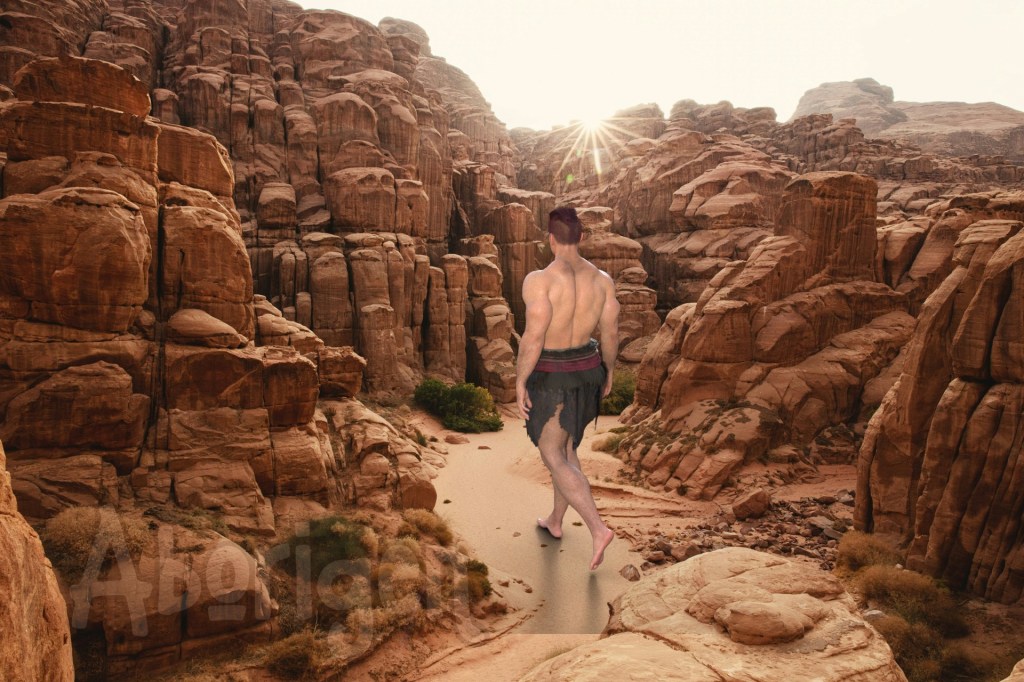
Currently I’m on a project to study the Elder Futhark runes, focusing on each one a week at a time. This post is an excerpt from my site dedicated to such esoterica, but I wanted to share it here.
I have a problem with Thurisaz! He’s a brutal giant, a Jötunn and a Þurs (monstrous class of giants). The rune poems describe him as “anguish to women” or “torture to women,” and the reason for that isn’t hard to see. Think about what it would be like to be a woman, kidnapped by the sweaty fist of a giant, hauled helplessly back to his lair where he attempts to sexually aggress you. The physics don’t work, to understate it criminally.
More, the Icelandic rune poem colorfully describes him as “husband of a giantess.” Who’s she? Most translations of the original Icelandic overlook this detail. The original Icelandic, likely penned by either Magnús Ólafsson or Sveinn á Barði, circa 1600, mentions her name, Varðrún:
Þurs er kvenna kvöl ok kletta búi ok varðrúnar verr. Saturnus þengill.
We don’t see “Saturnus Þengill” included in most renditions of the Iceland rune poem. People just leave it out! It means “Saturnus, the prince,” and it suggests the planet Saturn rules over this rune. Here’s the same line rendered into Latin by Swedish linguist Hjalmar Axel Lindroth1, approx. 1913:
þurs, rupicola: mulierum formido, saxorum incola, Vardrunae maritus. Vardruna proprium nomen faeminis gigantum.2
Many people over the last four millennia have taken a crack at rendering these lines into English. What follows is a pretty consistent translation among sources, but note that they still omit the giantess’s name and any mention of Saturn.
Thurs – Giant. Torture of women and cliff-dweller and husband of a giantess.3
You’re going to hate me, but I asked ChatGPT to translate the Icelandic and Latin lines into English, and here’s what it came up with.
- (Icelandic) The þurs is the torment of women, cliff-dweller, husband of Varðrún.
- (Latin) Þurs, the cliff-dweller: a terror to women, a dweller among stones, and husband to Vardruna. Vardruna is a proper name used among female giants.
What we can discern from this is that the kenning “cliff-dweller” means this þurs lives among rocks, by extension mountains, and that he’s married to a giantess named Varðrún. Like we see, most translations leave this fact out, dismissing the troll-kona as nothing more than a nameless spouse. But that’s not the Old Norse way! Everything had a name: horses, brooms, everything. In ancient Scandinavian society, if you told your neighbor about a man you met in town, and you didn’t know that man’s name, then no. You didn’t meet any man at all.
Varðrún absolutely has a name, and she’s listed in the Nafnaþulur4, a section at end of the Skáldskaparmál, the third part of the Younger (Prose) Edda. I summarized all this, plus Norwegian rune poems, in my newsletter “The Giant-Rune and His Wife.”5 And in this detour I covered how the band Wardruna got their name: in a 2008 interview with Dark City Magazine6, Einar Selvik says it means “guardian of secrets” or “she who whispers.”
Giantess specialist Lotte Motz breaks the etymology down: vörðr (m.) “watchman” + rún (f.) “mystery, secret lore.”7 It’s no stretch at all to interpret Varðrún as the keeper of mysteries and lore—but then, so were most giantesses in Old Norse mythology. They existed before the gods, they retained ancient knowledge that Óðinn certainly coveted, enough to raise a völva (seeress) from the dead to obtain it. Should we interpret the translated Latin verse to mean that “secret-keeper” is simply a kenning for all giantesses (“a proper name used among female giants”)? I don’t think so: I think Varðrún’s name is unique to her and describes her role, just as Friðr means “beautiful,” Skaði comes from “to harm,” Hyrrokkin means “wrinkled,” and Bakrauf means “anus.”
So, no, Thurisaz and I got off on the wrong foot immediately. I was prejudiced against him, and he had no interest in anything I had to offer. However, he entered my life regardless, and when that happens, obstacles rise up to test who you are as a person.
Sources
- Wikidata – Hjalmar Lindroth
- R.I. Page, “The Icelandic Rune-Poem“
- Wikisource – Rune Poems
- Encyclopedia Mythica – trollkvinna
- That’s About the Size of It: The Giant-Rune and His Wife
- Dark City Magazine: “Wardruna – Secrets of the Runes” (Internet Archive)
- Lotte Motz, “The Giantesses and Their Names“


Leave a Reply